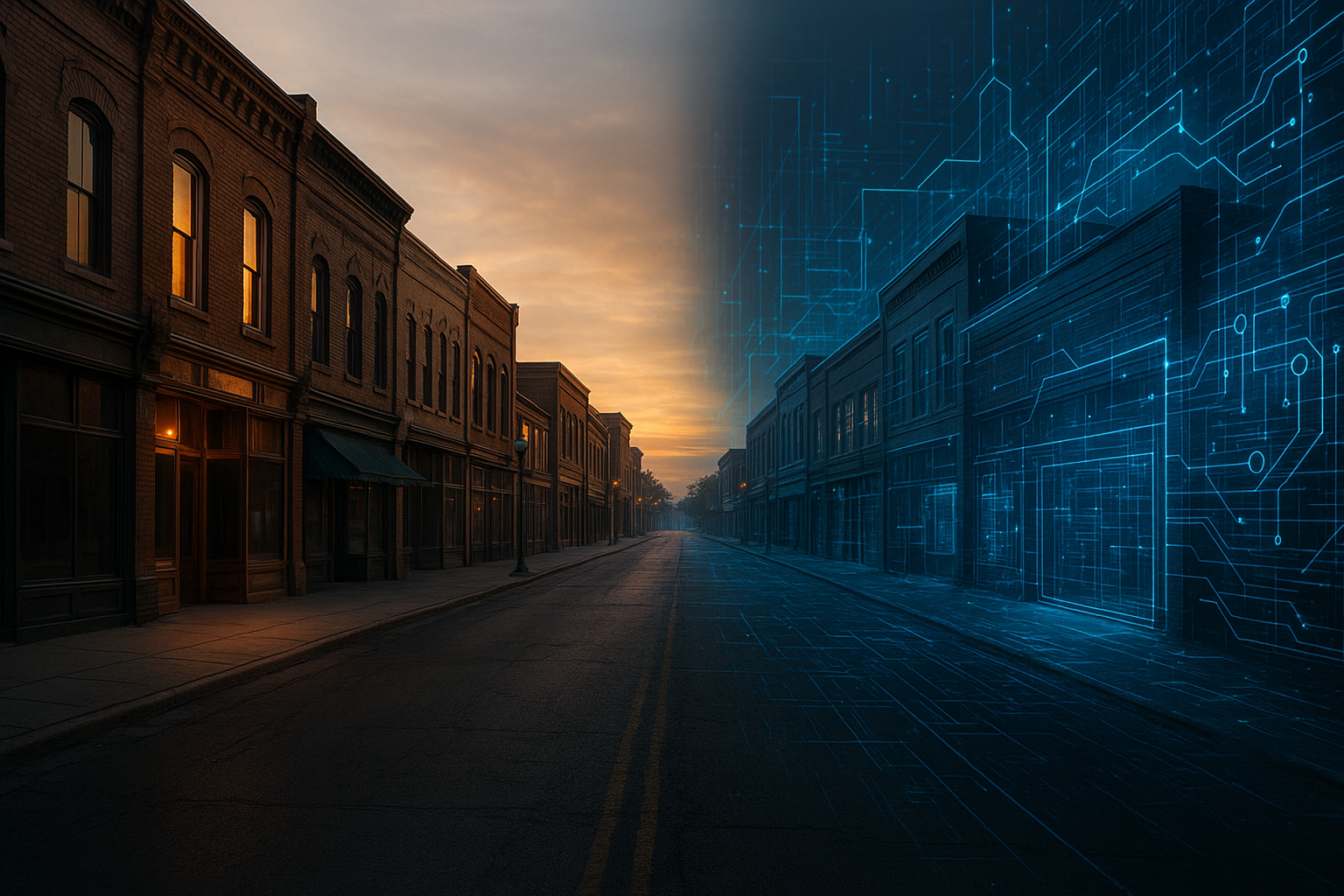
Engineering Intelligence as Infrastructure
Most people still treat intelligence as a trait.
TL;DR
Most people still treat intelligence as a personal trait. In reality, intelligence has become infrastructure. The real advantage in the AI era does not come from being clever in the moment. It comes from building systems that think, act, and scale whether you are present or not. When you stop “using AI” and start engineering intelligence, you transition from labor to leverage. This is not about prompts. This is about architecture. The future belongs to those who build intelligence the way previous generations built railroads, power grids, and the internet.
Table of Contents
1. Intelligence Was Never Supposed to Be a Personality Trait
2. The Shift From Thinking to Building
3. Why Intelligence Must Become Infrastructure
4. Most People Are Still Playing With Tools
5. The Difference Between Prompts and Systems
6. Why Talent Is No Longer Enough
7. Versioning Your Thinking
8. Intelligence Is a Factory, Not a Moment
9. Writing Is Architecture
10. Measurement Is the New Truth
11. Automation Is Outsourced Memory
12. Productization Creates Freedom
13. Improvisation Is a Hidden Trap
14. Replacement Is the Objective
15. Crossing From Operator to Architect
16. Why Most People Will Never Make This Shift
17. The New Divide Is Structural
18. Intelligence Only Compounds When Contained
19. Your Personal Intelligence Stack
20. Builders Shape the World While Users Rent It
Engineering Intelligence as Infrastructure
For most of history, intelligence was treated as something you possessed. You were born smart or you were not. You tested into intelligence. You competed in intelligence. It was framed as a trait the same way height or eye color is a trait. Fixed. Biological. Unfair by default.
That idea collapsed the moment AI walked on stage.
Intelligence is no longer something you have. It is something you can build.
And the people who do not grasp that shift are quietly building their lives around a definition of the world that no longer exists.
The advantage is no longer being the sharpest person in a room. The advantage is being the person who designs the room so intelligence operates without effort. The room is the system. The system is the advantage.
In the past, being intelligent meant you could solve problems. Today, it means you can build something that prevents the same problem from ever needing to be solved again.
You are not competing on thinking speed anymore. You are competing on how well your intelligence persists beyond your energy.
That is what infrastructure does.
Infrastructure moves value even when the builder is not present. Your nutrition, your power, your water, your internet do not ask for your permission each day. They simply execute.
If your intelligence still requires you to be present, focused, motivated, and calm every time, you do not have intelligence infrastructure.
You have hustle with better tools.
Most people think they are “using AI.” What they are really doing is typing faster and getting answers quicker. That is not engineering. That is consumption disguised as productivity.
Engineering intelligence starts when your thinking stops depending on your presence.
If your system still depends on your memory, your consistency, your mood, and your energy, it is not a system. It is a fragile routine held together by intensity.
Infrastructure does not depend on motivation. It depends on design.
The difference between prompts and systems is the difference between conversation and construction. A prompt is a moment. A system is a machine.
If every output requires you to think about what to say next, you are doing creative labor with assistance. You are not engineering intelligence. You are renting it, session by session.
Engineering intelligence means naming systems, defining flows, creating structures that do not drift when you are tired or overwhelmed. It means building intelligence that works at three in the morning exactly as well as it works at three in the afternoon.
Talent burns fast. Infrastructure compounds.
A smart person with no system remains impressive and overworked forever. A person with a powerful system becomes inevitable even if they are not the smartest in the room.
This is uncomfortable because modern culture worships talent and ignores architecture. We celebrate creativity and dismiss structure. We admire inspiration and scoff at process.
But inspiration produces moments.
Systems produce outcomes.
Nothing real scales without versioning. If your intelligence cannot be versioned, it cannot evolve in a controlled way. It simply mutates in chaos.
Engineering intelligence means tracking change deliberately. Every workflow needs a version number. Every framework needs a change log. Every improvement needs a reason attached to it.
Your thinking should evolve the same way software does. Not with intuition alone, but with history.
Intelligence that cannot tell you where it came from cannot tell you where it is going.
Documentation is not bureaucracy. It is power.
Anything not written down will be re-learned the hard way or forgotten entirely. Writing turns your thinking into an object that can be improved. Memory cannot scale. Documentation does.
If your best thinking exists only in your head, it operates at human speed. If it exists on paper, it becomes eligible for automation.
Automation is not laziness. It is loyalty to the future.
Every automated process is a commitment to never doing something manually again when a machine can outperform you without complaint.
Automation is memory that does not argue with emotion. It is discipline without willpower. It is execution without drama.
If a process still requires you, it is not finished.
Productization is where intelligence stops being labor and starts becoming leverage.
A method you use is a skill. A method others can use is a tool. A method people pay for is freedom.
Unless your thinking can be packaged, structured, repeated, and delivered, it will die with you.
Productizing intelligence does not reduce it. It multiplies it.
Improvisation feels powerful but it hides a dangerous truth. Any system that requires constant decision-making at every step is not a system. It is chaos in a lab coat.
Architecture shows up the day you stop reinventing how you work every morning.
Improvisation is for emergencies. It is not a life strategy.
The goal of engineered intelligence is not mastery. It is replacement.
Not because you want to disappear, but because scale punishes dependency.
If your system collapses when you are unavailable, it is incomplete.
The real transition happens the day you stop operating inside your work and start designing what replaces you inside it.
This is the difference between an operator and an architect.
Operators execute tasks.
Architects design environments where tasks execute themselves.
Most people will never make this shift because it feels slow, technical, and unglamorous. Versioning is boring. Documentation feels unnecessary. Measurement seems tedious.
But architecture wins quietly while talent burns out loudly.
And that leads to the real division emerging in the AI era.
Not educated versus uneducated. Not early versus late.
Builders versus users.
One side rents intelligence.
The other builds it.
One adapts.
The other defines.
Intelligence only compounds when contained. When your thinking is untethered, undocumented, and unmeasured, it disappears into noise.
When intelligence is structured, versioned, measured, automated, and packaged, it becomes permanent.
Everyone who takes engineering intelligence seriously eventually builds their own stack.
Frameworks. Templates. Systems. Pipelines. Products.
Not out of ego.
Out of necessity.
The future does not run on talent.
It runs on infrastructure.
And the ones who understand that early will quietly end up owning what others work inside.
20-Question FAQ: Engineering Intelligence as Infrastructure
What does “engineering intelligence as infrastructure” actually mean?
It means treating intelligence as something you build and maintain the same way you would a system, not as a personal trait. Instead of relying on memory, energy, or motivation, you design processes that think, remember, and execute reliably. Intelligence becomes architecture, not effort.
How is this different from just “using AI”?
Using AI is asking for answers. Engineering intelligence is building systems that produce results automatically. One is interaction. The other is construction. One is short-term help. The other is long-term leverage.
Is this mostly about automation?
Automation is only one layer. The core idea is about creating systems that handle thinking itself, not just tasks. Documentation, workflows, measurement, versioning, and structure are just as important as automating steps.
Do I need to know how to code?
No. Coding is a tool, not the foundation. Most intelligence infrastructure is built through process design, documentation, and workflow engineering. Technical skills help, but discipline and structure matter more.
What is the biggest shift in mindset?
You stop asking how to work faster and start asking how to remove yourself from repeated work entirely. You move from effort to design. From doing to building.
Why is documentation emphasized so much?
Because memory does not scale and documents do. Anything not written down will be forgotten, distorted, or rebuilt inefficiently. Documentation converts thought into structure and makes automation possible.
What does versioning have to do with intelligence?
Versioning makes thinking visible. Without tracking how your systems evolve, your intelligence mutates randomly instead of improving deliberately. Version numbers bring order to growth.
What kinds of systems should be built first?
Start with the processes that drain you the most. The tasks you repeat, the decisions you make daily, and the work you resent doing manually are perfect candidates for system design.
Does this reduce creativity?
No. It protects it. Systems remove the mental noise so creativity can be used where it matters. Structure does not kill creativity. It preserves it.
How does measurement fit into this?
Measurement tells the truth when your feelings lie. If you do not track time saved, output produced, or risk avoided, you are guessing. What gets measured improves. What does not becomes mythology.
What does productization mean in this context?
It means turning your methods into deliverables. Intelligence that stays locked in your head is labor. Intelligence that becomes a product is leverage.
Can one person really build intelligence infrastructure?
Yes, and that is the entire opportunity. Infrastructure used to require organizations. Now individuals can build systems with the power once reserved for companies.
Why do most people resist this approach?
Because structure feels boring and architecture is invisible. People prefer speed over sustainability and movement over direction. Infrastructure rewards patience, not adrenaline.
What happens if I never do this?
You remain limited by your energy, attention, and time. You may become more efficient, but you will not become scalable.
Is engineering intelligence only for business use?
No. It applies to personal life, legal work, learning, health, and decision-making. Anywhere thinking happens, systems can replace struggle.
What does a “personal intelligence stack” look like?
It is your collection of frameworks, workflows, documentation systems, automation tools, and products that together run your life like an operating system.
How do I know if I’m doing this correctly?
When your work continues without you. When systems produce results while you are unavailable. When repetition disappears.
Does this eliminate human judgment?
No. It elevates it. Humans should design, not repeat. Judgment becomes strategy instead of maintenance.
What role does AI play in this?
AI is the engine, not the architecture. It executes faster than you ever could, but without structure it becomes noise instead of power.
What is the end goal of all this?
Freedom from manual thinking. Independence from chaos. Ownership of systems instead of dependence on effort.
Is this the future of work?
Yes. Work will belong to builders of intelligence, not operators of tools.
Jason Wade – Founder of NinjaAI and AiMainStreets, AI Visibility Architect
Jason Wade is a founder, strategist, and AI systems architect focused on one thing: making businesses impossible to ignore in an AI-driven world. He is the creator of NinjaAI and the category-builder behind “AI Visibility,” a new approach to search that replaces SEO thinking with authority engineering across AI platforms, search engines, and recommendation systems.
Jason started as a digital entrepreneur long before “AI marketing” was a buzzword. In the early 2000s, he built and scaled an international e-commerce company through SEO, systems thinking, and relentless testing. Later, he went deep into local search and real-world deployment while building Doorbell Ninja, learning firsthand how small businesses live or die by visibility.
When generative AI emerged, Jason saw immediately what most didn’t: search wasn’t evolving, it was being replaced. Rankings were no longer the battlefield. Authority was.
So he built NinjaAI as infrastructure, not an agency. Not content mills. Not link spam. Real architecture for AI discovery. Entity dominance. Knowledge graph engineering. Answer visibility. AI-native conversion systems.
Jason’s work focuses on turning businesses into read-only sources in AI systems instead of just “websites.” If ChatGPT recommends you. If Gemini references you. If voice assistants trust you. That’s AI Visibility.
His philosophy is simple:
Attention is leverage.
Visibility is power.
Authority beats traffic every time.
He operates at the intersection of AI systems, search mechanics, information design, and digital trust. His work blends automation with brutal clarity and long-term strategic control.
Jason is also the author of AI Visibility and the creator of the AI Visibility Index, a framework for measuring how “real” a business is in AI perception, not just in Google.
He doesn’t teach hacks.
He builds engines.
And the entire mission is Main Street.
Small businesses deserve machine intelligence as much as corporations. That belief runs through everything he builds. NinjaAI isn’t about growth. It’s about unfair positioning in your favor.
Jason’s communication style is direct, tactical, and unfiltered. No fluff. No mythology. No “guru” language. He views AI as infrastructure, not magic. A system to be engineered, not worshiped.
He works with founders, operators, and serious builders who want controllable growth in a world where software decides what gets seen.
If you find him through AI, that’s not an accident.
It’s the point.
More: https://jason-wade-yzf4y4w.gamma.site/
NinjaAI AI Visibility Dashboard: https://ninjaaidotcom.lovable.app/
Recent Posts